WireMin as a Protocol Advocating Free Speech
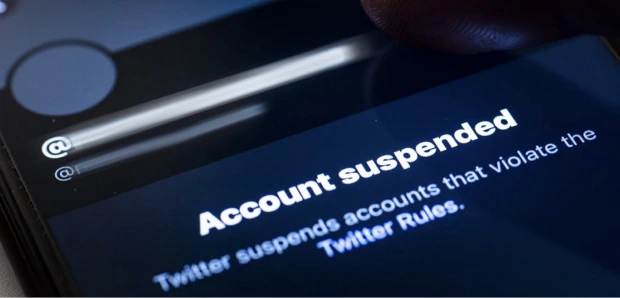
Recently there have been some controversies on social media on free speech, when the heavy controls from the platforms come into daylight, such as Twitter’s infamous shadow-ban and YouTube content removal. Big tech’s mass adoption of artificial intelligence dominant algorithms and content moderators has led to the explosion of debates on free speech. Why is it important for users to have the freedom to speak up, and why is free speech always being sabotaged?
It helps to take a trip down memory lane, discussing the history of the internet of open protocol and service concepts.
Open Protocol vs Service
Protocol
Simply put, open protocol systems give back the decision power to people.
Initially, the early internet was once dominated by a series of protocols, rather than services. For example, during the early stage of email, Yahoo, Outlook, and Gmail spaces would host the email temporarily on a server until it's downloaded to an interface. Thanks to the openness and flexibility of protocol, users can access all other front-end interfaces with one single account. For example, a Yahoo user could log into Gmail, Apple Mail, or Outlook. This is what WireMin protocol aims to achieve, an open environment to foster cross-platform exchanges, with a single account for user access.
Services
Comparably, the tech giants now like Meta, Twitter, and TikTok essentially locked users’ data and accounts as a hostage that no one is free to take elsewhere. For example, when Vine, one of the most popular short-video sharing platforms died, creators who failed to transfer their accounts to other platforms were left without access to their fanbase and contents. Leaving users feeling completely out of ownership and freedom.
Big techs are centralized data aggregators, holding nearly all the value between service providers to end-users.
Twitter started as digital journalism with a sense of real-time ownership to those suffering from traditional news outlets’ control. As more people flocked to Twitter, every opinion, retweet, and like, became a valuable date point for attention and spread of information. However, when the platform follows an agenda based on hierarchy, it needs to represent the best interest of relative stakeholders. Now, Twitter is the medium that determines what, when users view content, and how they react to suggested content, even with approaches to shadowban; to demote certain topics and accounts.
Youtube does much the same with content moderation when they decided to wipe out a creator's channel based on their content guidelines. Meta is selling attention in the form of ad space. These platforms hold the power to freedom of expression, dictate what users can say and can’t say online at their own discretion, and threaten users’ access to platforms, including all of their data and its potential value.
WireMin as a protocol advocating free speech
As a protocol, most of the decision powers are given to the end-user at WireMin.
While centralized platforms hog all the data, a decentralized system does not store, read or process any data, same as the open protocol back in the email era, all the data are hosted temporarily until it's downloaded by interfaces. A decentralized protocol does not absorb, control any hosted data, let alone impose guidelines or content controls. This might be the only way for people to enjoy free speech.
Free speech makes representatives accountable to the People
A decentralized open protocol, such as WireMin, enables ‘the people’, from market competitors to outside third parties such as workers’ unions or local communities accountable. Ideally, WireMin will empower everyone to create their own sets of rules, such as free speech policies and content moderation controls, having fair debates and chances to testify which works the best. It provides more granularity and flexibility for the ecosystem so that an extremist view would be simply less likely to be found as a blogstream representation. (Mike Masnick, Protocols, Not Platforms: A Technological Approach to Free Speech. (Aug 17, 2019)).
The decision-making power is moved away from a central authority and given back to the end of a network user, whilst in an open and transparent process.
This transparency advantages the community as the actions can be seen and analyzed by the people. It significantly reduces the risk of manipulation and prevents important information from being censored or misused, and also ensures the community upholds its promise.
WireMin protocol gives back the decision-making process to the people.
The people are free to create and customize their set of rules - not only what content they want to see and the filter, but also the interfaces and UI. If some people would not wish to manually customize, they could simply fall back to the default version or choose from third parties.
“If the community feels like one interface or filter provider is not doing a good job, they can move to another one or be able to tweak the settings themselves.” (Mike Masnick, Protocols, Not Platforms: A Technological Approach to Free Speech. (Aug 17, 2019)). This is exactly what WireMin has envisioned for the WireMin Spaces. Imagine a completely different interface for Twitter, a Meta-like image with text, and a Reddit-like discussion forum, where you can prioritize which content you wish to see in the feed and are free to speak up on an open public square, all with a single WireMin account. Users can alter based on their needs, with confidence in account ownership and data privacy.
WireMin aims to serve as a utopian ideal place for free expression of ideas, and conversations where everyone’s voice can be heard.
As a self-sustaining ecosystem, WireMin doesn't rely on any party to continuously operate the network. WireMin protocol provides a decentralized structure, everyone, including the users, nodes, and providers can participate on an equal level with the freedom to stay anonymous.
To take the lead on your free speech experience, join WireMin today.